
Choosing between steel and timber framing is one of the most important decisions you’ll make early in a building project. Both materials have their place in construction, and the right choice depends on your specific situation: what you’re building, where you’re building it, and what matters most to you in the long run.
Here’s an honest comparison from a steel framing manufacturer’s perspective, tailored to the realities of building in Perth and across Western Australia.
The Case for Steel Framing in Perth
Termite immunity. Let’s start with the big one. Perth sits in one of Australia’s most active termite zones. Subterranean termites cause more damage to buildings in WA than floods, fires, and storms combined. Steel frames are completely immune to termite and borer attack. There’s no treatment required, no ongoing inspections beyond standard building maintenance, and zero risk of hidden structural damage.
Timber frames, even when treated, are still susceptible over time. Treatment chemicals break down, physical barriers can be breached, and the reality is that termite management is an ongoing cost and concern for every timber-framed building in Perth.
Dimensional stability. Perth’s climate swings between hot, dry summers and cool, wet winters. Timber responds to these changes by expanding and contracting, which over time can lead to warped frames, cracked cornices, sticking doors, and uneven surfaces. Steel doesn’t move. A steel frame that’s straight and square on the day it’s installed will still be straight and square in 20 years.
Fire resistance. Steel is non-combustible. In bushfire-prone areas (and there are plenty across Perth’s outer suburbs and the hills), a steel frame contributes to a higher Bushfire Attack Level (BAL) rating for your home. For builds that need to comply with BAL-29, BAL-40, or BAL-FZ, steel framing simplifies the process considerably.
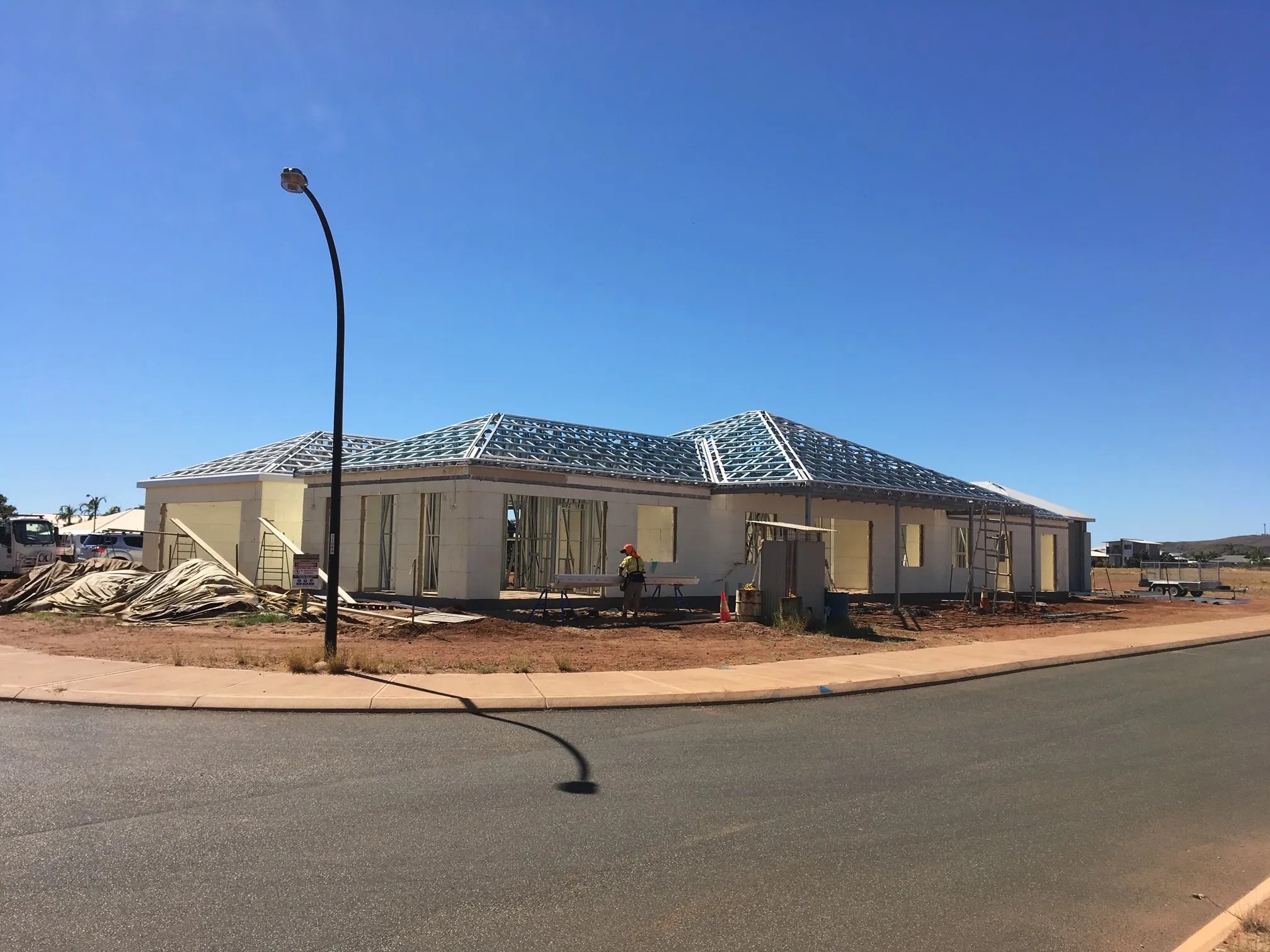
Speed and precision. Steel frames are manufactured off site in a controlled environment using CNC equipment. Every stud, track, and truss component is cut to exact specifications and arrives at site ready to assemble. This means faster frame erection times, less waste, and fewer on-site errors. For builders working to tight timelines, that precision translates directly to time and cost savings.
Sustainability. Steel is 100% recyclable without any loss of quality. At the end of a building’s life, the steel frame can be recovered and recycled into new products. Steel framing also generates less site waste than timber, and because it’s manufactured off site, there’s less noise, dust, and disruption during the framing stage.
Where Timber Still Has a Role
To give you the full picture, there are situations where timber framing can be a reasonable choice:
Lower upfront cost in some cases. For simple, standard residential builds in non-cyclonic areas with low termite pressure, timber framing can have a lower upfront material cost. However, this comparison often doesn’t account for the full lifecycle costs, including termite management, maintenance, and repairs.
Familiar for some trades. Some builders and subcontractors are more experienced with timber framing and may prefer working with it. That said, steel framing installation is straightforward with the right documentation and support, and most experienced builders transition to steel with minimal adjustment.
Small renovations and additions. For minor internal alterations where a full engineered frame isn’t required, timber can be a practical choice. But for any structural work, extensions, or new builds, steel’s advantages become much more significant.
The Perth-Specific Factors That Tip the Balance
When you look at the conditions specific to Perth and WA, the argument for steel framing gets stronger:
Termite zones. The entire Perth metro area, from Joondalup to Rockingham and out to the hills, falls within high-risk termite zones. Building with steel removes the single biggest structural risk to your home.
Bushfire-prone areas. Suburbs in the Perth hills, the Darling Scarp, and many outer metro areas are subject to bushfire planning requirements. Steel framing’s non-combustible rating is a significant advantage in meeting BAL compliance.
Cyclone regions. If you’re building anywhere north of Geraldton, cyclone-rated construction is mandatory. Steel framing provides the consistent material properties and engineered connection systems needed to meet cyclonic wind load requirements.
Coastal exposure. Perth’s coastal suburbs deal with salt-laden air that accelerates corrosion and degradation. Modern steel framing uses galvanised or Zincalume-coated steel (such as BlueScope’s TRUECORE) that is specifically designed to resist corrosion in Australian conditions.
Soil conditions. Parts of Perth sit on reactive clay soils that move with moisture changes. While this primarily affects the slab design, a dimensionally stable steel frame that doesn’t add its own movement to the equation helps maintain the overall structural performance of the building.
Making Your Decision
The best framing material for your project depends on what you’re building and where. For most new residential builds in Perth, steel framing offers a combination of durability, speed, precision, and long-term value that’s hard to beat. For commercial buildings, the case is even stronger.
If you’re weighing up steel vs timber for an upcoming project, we’re happy to talk it through. We’ll give you an honest assessment based on your plans, your site, and your priorities.